 Common mistakes when buying a property in Spain

Buying a property in Spain is for many people a life project full of enthusiasm and the search for wellbeing by the Mediterranean. When someone decides to take that step in places such as Jávea or Moraira, the initial emotion can push into the background a number of checks that are decisive for the deal to work out.
Falling for a bright villa or a villa surrounded by pines is usually instant, but the purchase process on the Costa Blanca Norte calls for a technical, level-headed eye. Buyers arriving from other European countries often assume that planning and land registry controls work exactly as they do back home.
Knowing the local market and the administrative framework of the Comunidad Valenciana in depth keeps a dream from turning into a bureaucratic problem that is hard to solve. In that sense, getting to know who we are and how we work helps you see the value of rigorous intermediation before you commit to anything financially.
Most costly surprises do not appear when the sale price is agreed, but in the weeks before the notarial deed is signed. Overlooking apparently minor points can lead to unforeseen tax obligations or to the impossibility of legalising existing building work.
To protect your capital and make decisions with certainty, it is essential to identify those usual traps and to deal with them in time, with the right support.
Buying a property in Spain: the mistakes that cost the most
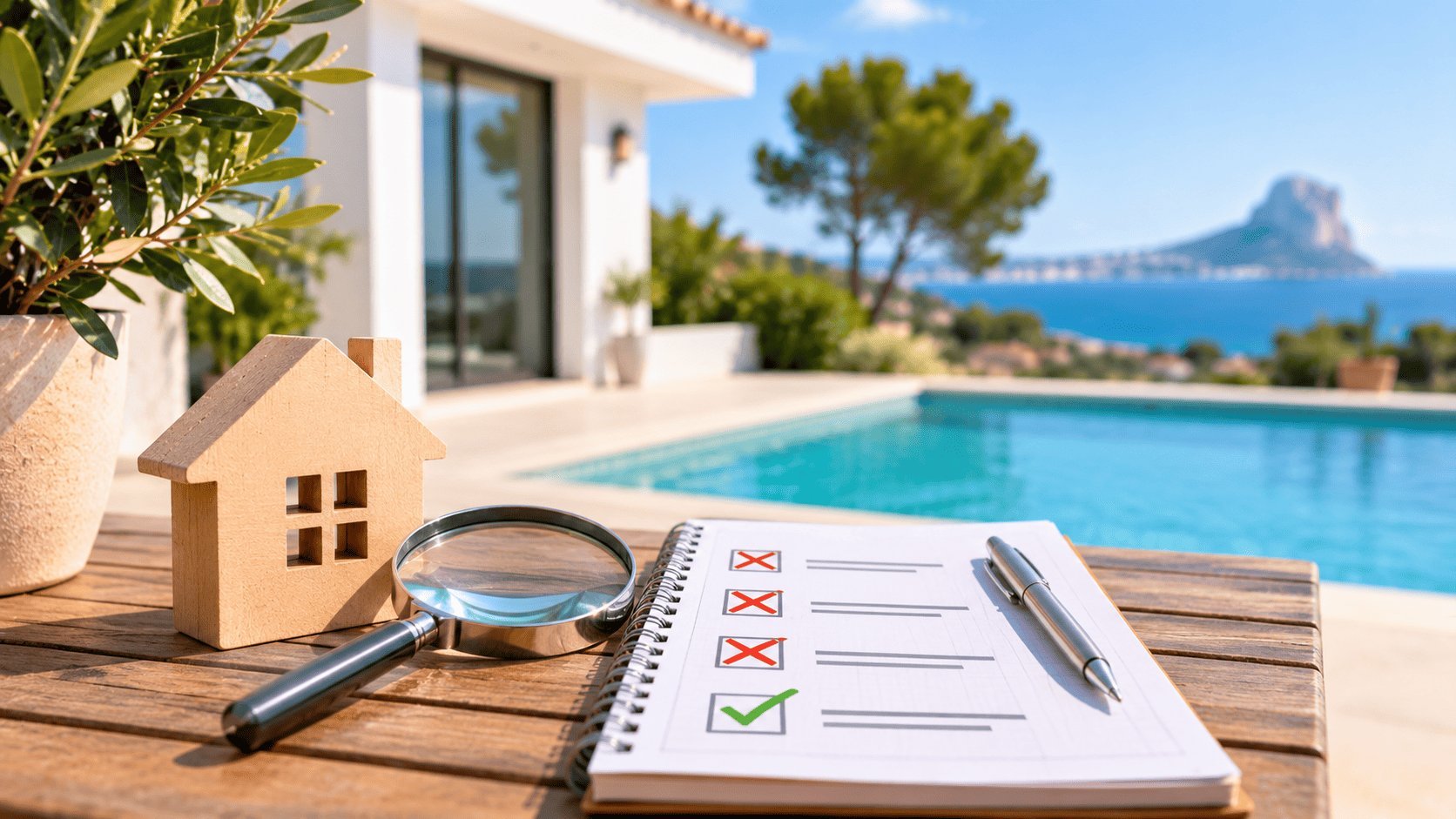
Buying a property in Spain means avoiding a series of pitfalls that can compromise both your peace of mind and the return on your investment. Below we break down the situations we come across most often in property transactions in our area.
Checking the planning rules after signing
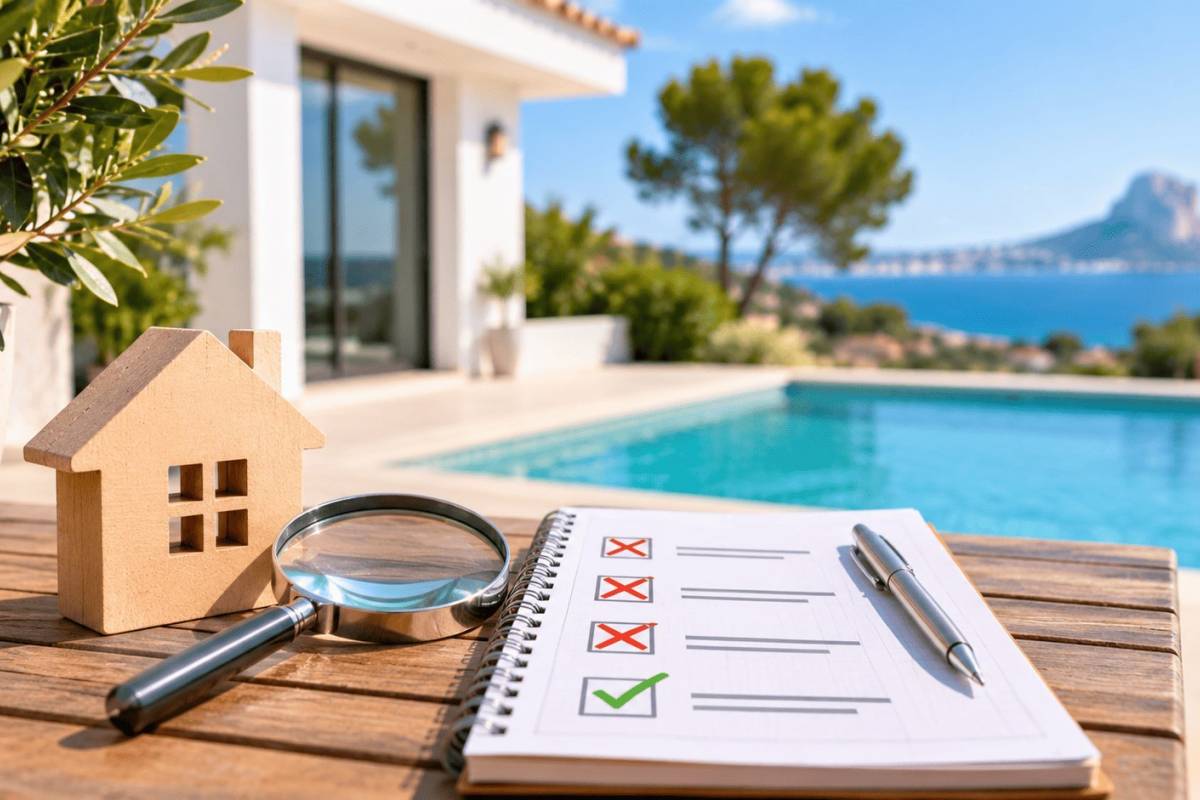
Discovering that a plot sits on protected rustic land, or that a parcel lacks the proper subdivision, is devastating when it happens after a deposit has been paid. Along the coast and inland in this area there are environmental and right-of-way constraints that only a qualified technician knows how to read. That is why reviewing the planning certificate and the permitted uses before taking on any contractual commitment is essential if you do not want to inherit restrictions created by someone else.
Mistaking the bank valuation for the market value
Many people wrongly believe that the report issued by the lender sets the real, fair price of a home. In fact, that figure only reflects the lender's risk criteria for granting the mortgage, whereas market value depends on actual supply and on comparable sales in the same development. Relying only on the bank valuation can lead you to pay too much or to let a genuine opportunity slip away.
Working out the costs by eye
On top of the main outlay you have to add the taxes and fees that come with the public deed. Depending on whether you buy a new-build home or a resale, the property transfer tax applies, or else VAT together with stamp duty. On top of that come the notary, land registry, gestoría and legal fees, as well as the ordinary running costs of the property afterwards.
Signing the reservation contract with no conditions
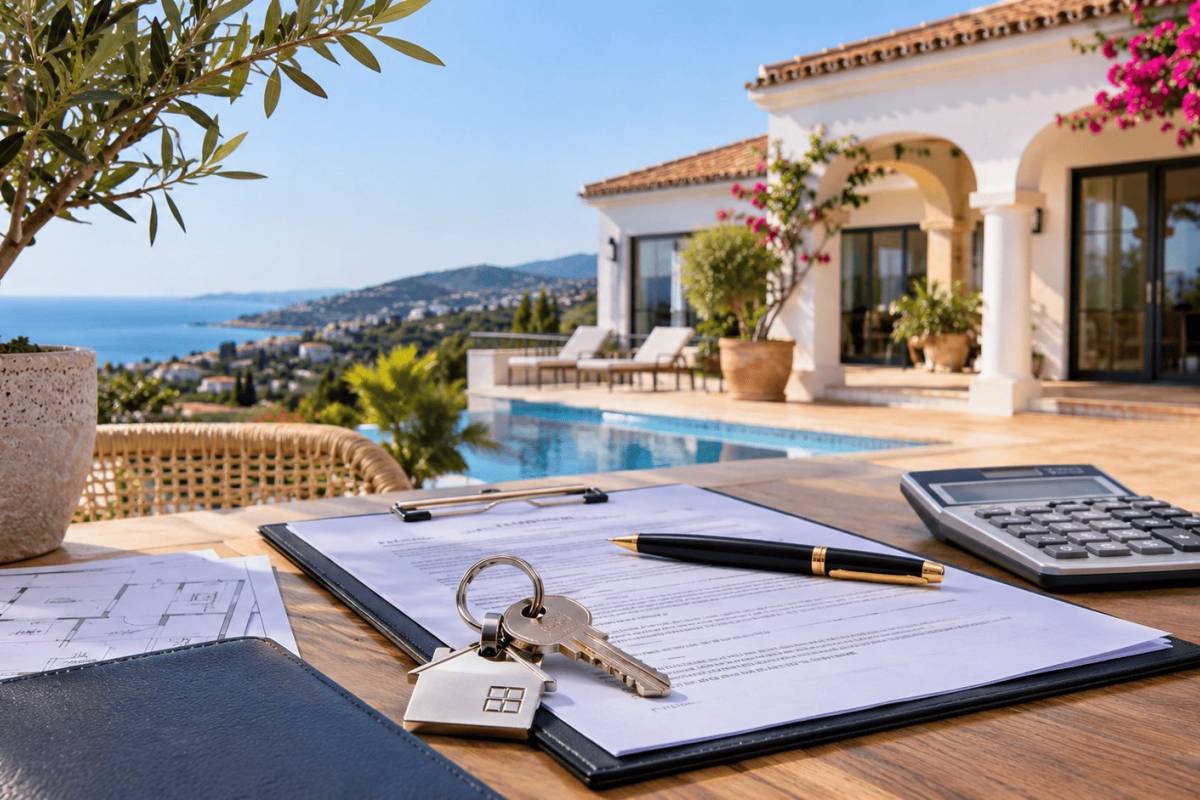
The reservation contract seals the commitment between the parties, but drafting it in a hurry carries a notable financial risk. It is essential to include conditions linked to securing the mortgage and to a satisfactory check of all the paperwork. If those safeguards are not written down, the buyer can lose the amounts paid if the purchase falls through for reasons beyond their control.
Taking extensions and refurbishments for granted
It is common to fall in love with a glazed porch, a renovated pool or an extended terrace and to assume that everything has the council's approval. If that work has no building licence or is not properly recorded in the land registry and the cadastre, the new owner takes on the job of regularising it or faces planning infringement proceedings that are hard to resolve.
Forgetting the real state of the community and the property
In coastal developments it is vital to ask for the certificate confirming that community fees are up to date and to check that no extraordinary levies have been approved. Likewise, checking the habitability certificate or second-occupation licence, the energy performance certificate, the supply contracts and the absence of structural damp caused by the proximity of the sea will spare you unexpected costs after moving in.
Buying a property in Spain, step by step with Sunshine Villas
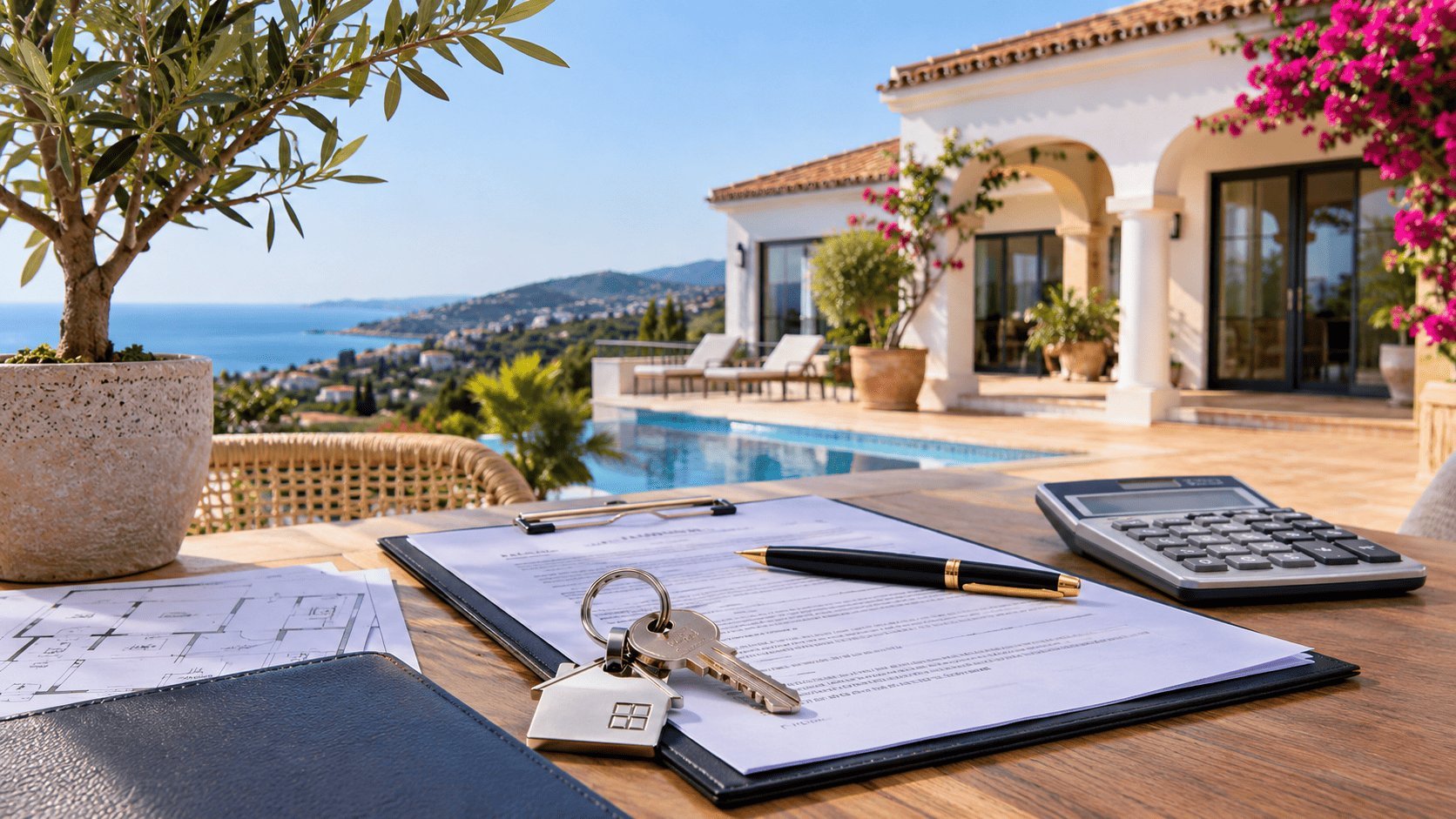
Buying a property in Spain with the support of professionals who know the ground turns a paper maze into a transparent, rewarding path. Our team coordinates the whole process so that every stage moves forward in order and with full legal certainty.
From first contact to handing over the keys
At Sunshine Villas we have more than twenty-five years of experience in the property sector, having started out as an agency in London before building a team of ten agents in Jávea. We offer a complete service covering pre-sale, advice during the transaction and solid after-sales support thanks to our property management department and our guidance on mortgages and finance. We work in outstanding locations such as Jávea, Dénia, Moraira, Benitachell, Calpe, Altea, Benissa, Jesús Pobre, Pedreguer, Gata de Gorgos and the Jalón and Orba valleys, offering detached villas, villas with pools, traditional estates, village houses, apartments, plots and new-build projects.
Buying a property in Spain becomes a calm experience when you have the closeness and backing of specialists based in the area. We invite you to contact our team to answer any question and to shape your new Mediterranean project.
- Office: Av. de la Fontana, 2, 03730 Jávea, Alicante
- Phone: +34 630 949 196
- Email: ask@sunshinevillas.co.uk